Machining equipment
The tolerance on a replacement part is held by the machine, not by how carefully someone files it afterwards. This is what we run.
Horizontal machining centres
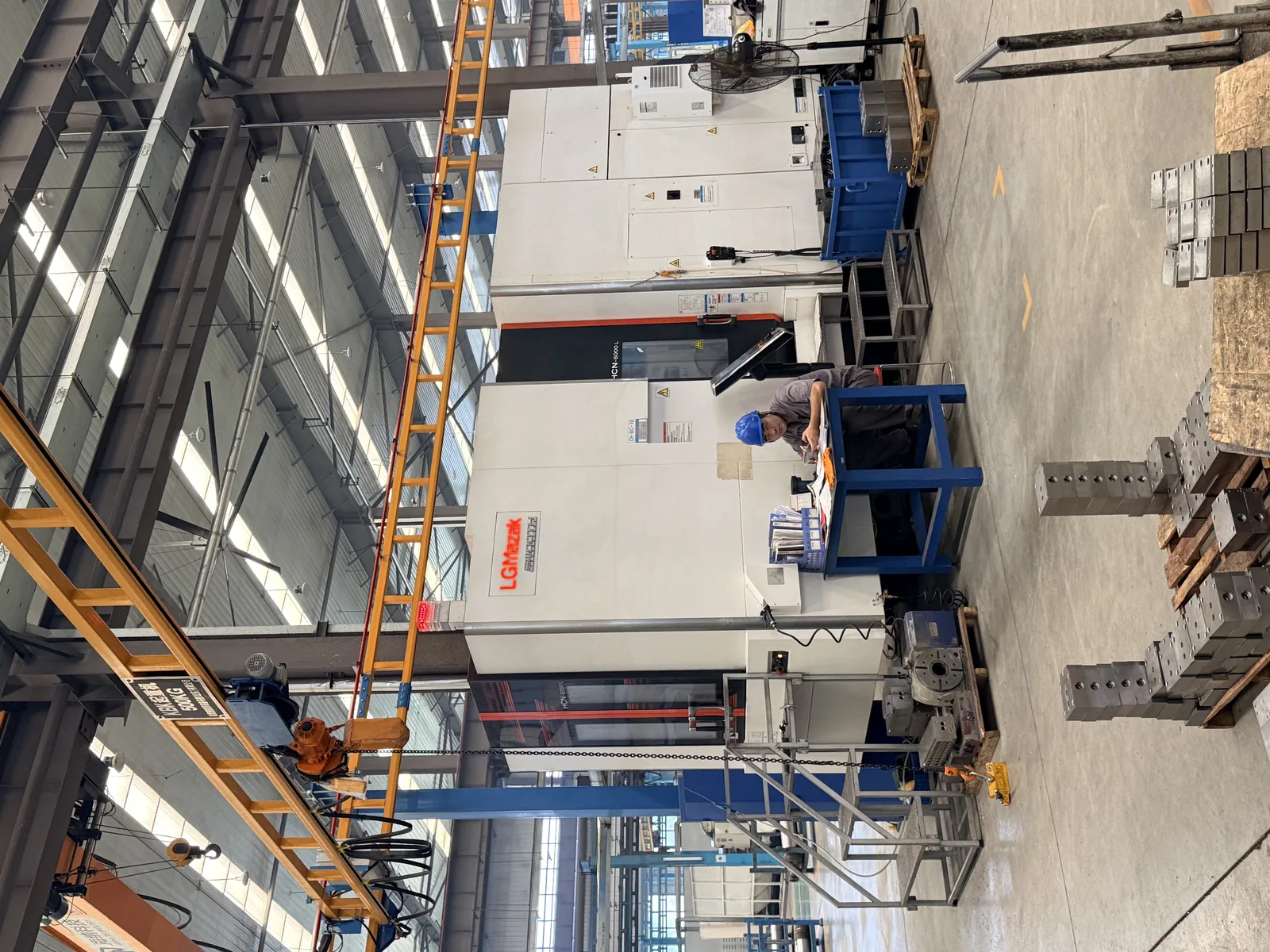
Valve blocks and manifold bodies are machined on horizontal machining centres. Multi-face work is done in fewer set-ups than on a conventional mill, which is what keeps position tolerances on port patterns predictable from one batch to the next.
Handling and workholding
Overhead cranes cover the machining and assembly bays, so heavy bodies and assembled units are moved without improvised lifting. Workholding and fixtures are made in-house, which shortens the time between a drawing being approved and the first part coming off the machine.
Deburring, cleaning and surface preparation
Deburring is done by hand at dedicated benches, because a burr left in a spool bore becomes a contamination failure in service. Cleaning and surface treatment follow the drawing requirement — for a hydraulic component the internal cleanliness matters as much as the external finish.
Assembly
Valves are assembled and set at benches by fitters who work on the same families repeatedly rather than across everything. Repetition is what produces consistency in a product where a spring setting or a seat condition decides whether the valve works.
Instrumentation and gauges
Test benches and gauges are calibrated on a schedule and the calibration status is recorded. If a customer's quality system requires the calibration certificates for the instruments used on their order, they can be supplied.